Buying Prayer Mats Wholesale: Raschel Embossed, Digital Printed, and Velvet Styles Compared
November 25, 2026
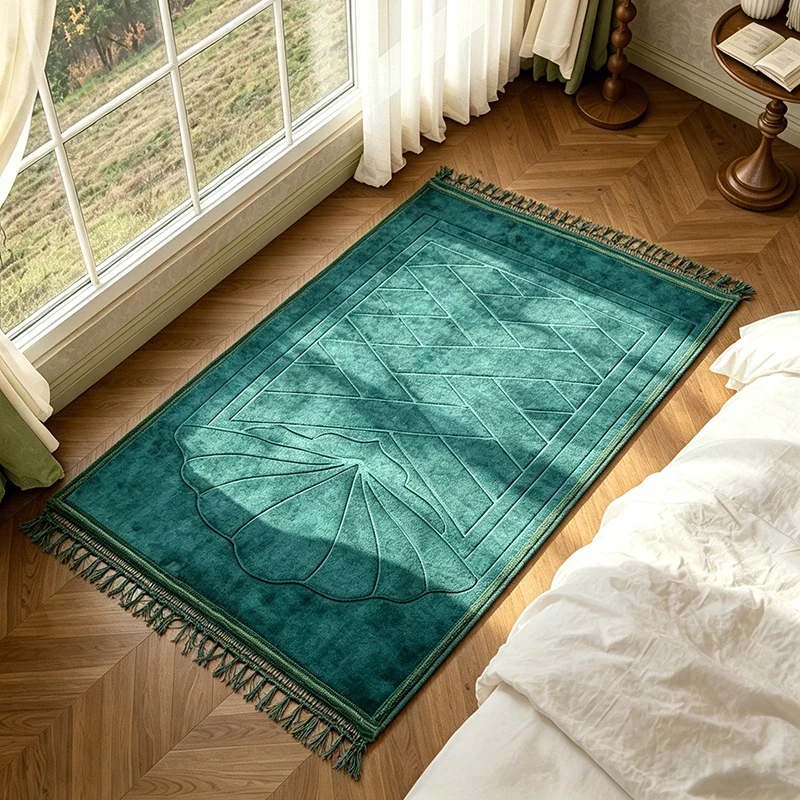
When sourcing prayer mats wholesale, start by matching the surface construction to your retail tier and artwork brief. Choose embossed Raschel for raised sculptural motifs and plush visual presence, digital printed surfaces when multi-colour architectural scenes or custom Ramadan and corporate gift artwork are the priority, and smooth velvet-style finishes for clean classical aesthetics. Lock finished body dimensions, fringe construction, edge trim, backing, and order volume before requesting a sample. Under a 100 m² factory starting order quantity, rectangular area math translates to at least 130 pieces at 70 × 110 cm or 105 pieces at 80 × 120 cm, though splitting that 100 m² across multiple patterns or shaped outlines requires per-order confirmation. This guide covers individual wholesale prayer mats rather than wall-to-wall mosque roll carpeting, and formats such as 70 × 110 cm and 80 × 120 cm are commercial reference sizes rather than a universal industry or religious standard. Embossed Raschel, Digital Printed, and Velvet-Style Prayer Mats Compared This buying guide compares three surface styles ordered by B2B wholesale buyers serving Saudi Arabia, the UAE, wider GCC markets, and global retail channels. Each behaves differently on display, carries different artwork strengths, and needs its own physical checks at sampling. Embossed Raschel mats rely on raised relief patterns, typically mihrab arches, geometric medallions, or vintage floral borders, to give the mat visual depth and a fuller hand feel. In the wholesale prayer mats collection at Custom Carpet Maker, representative options include a rectangular embossed Raschel prayer mat style at a 70 × 110 cm reference size, a printed Raschel prayer mat style at 70 × 110 cm that layers colour detail onto sculpted relief, and vintage floral border Raschel formats at 80 × 120 cm. Because shoppers can read the carved relief from a shelf or hanging rack,…
Sourcing Custom Rugs Direct from a China Factory vs. Wholesale Hubs
November 22, 2026
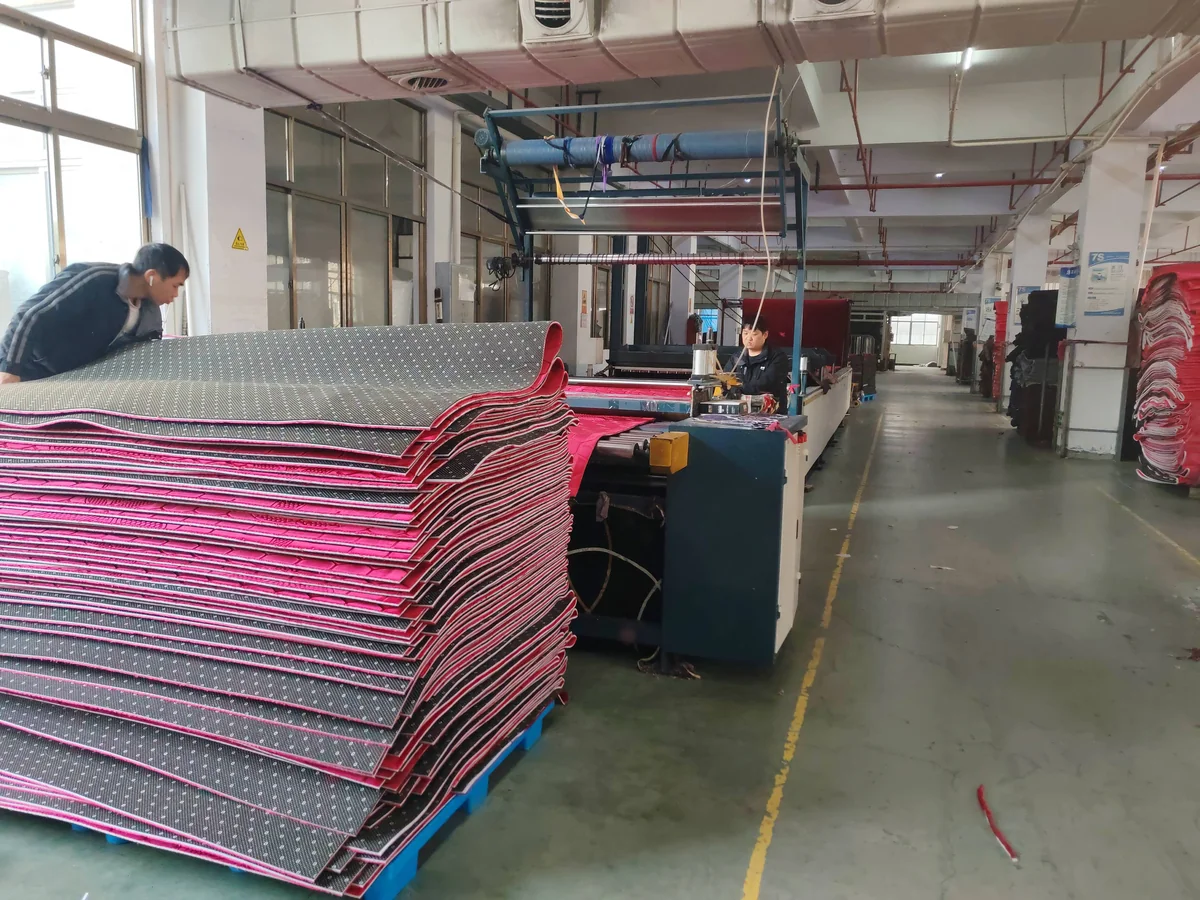
Buy from a regional wholesale hub such as Dubai when you need immediate stock, small mixed quantities, or standard market designs you can inspect on the floor. Source directly from a China rug factory when your business requires custom dimensions, private-label artwork or brand logos, consistent repeat runs, or a lower landed unit cost at bulk volume. Direct bulk ordering with Custom Carpet Maker covers individual area rugs, prayer mats, door mats, kitchen mats, and bath mats and sets rather than wall-to-wall broadloom carpet. Orders start at 100 m² with a 3-metre maximum production width, and physical samples are charged at retail prices with the sample payment credited toward your next bulk order. A lower ex-factory quote does not automatically deliver a lower landed cost, because backing weight, packing volume, sea freight, and destination conformity checks all affect the final figure. When China Factory-Direct Beats Regional Wholesale Hubs Regional re-export hubs and Chinese factories solve different purchasing problems. Wholesalers in Dubai or similar regional trading centres hold finished inventory across common sizes and fast-moving patterns, which removes production wait times and lets buyers pick up mixed cartons in a single trip. That model works well for urgent restocking, seasonal gap filling, or testing consumer appetite before committing capital to a production run. Direct factory manufacturing wins once specifications matter more than next-week availability. If a retail chain needs exact room dimensions, a brand wants exclusive colourways printed with its own mark, or an importer needs a repeat shipment six months later to match the first lot in pile feel and backing, open-market stock rarely holds steady. Regional traders also build their own warehousing, financing, and resale margins into each piece, which widens the gap on repeat bulk orders. Decision Factor China Factory-Direct Regional Wholesale Hub (e.g., Dubai) Best commercial use…
Rug and Mat Care: Choosing the Right Washing Method
November 11, 2026
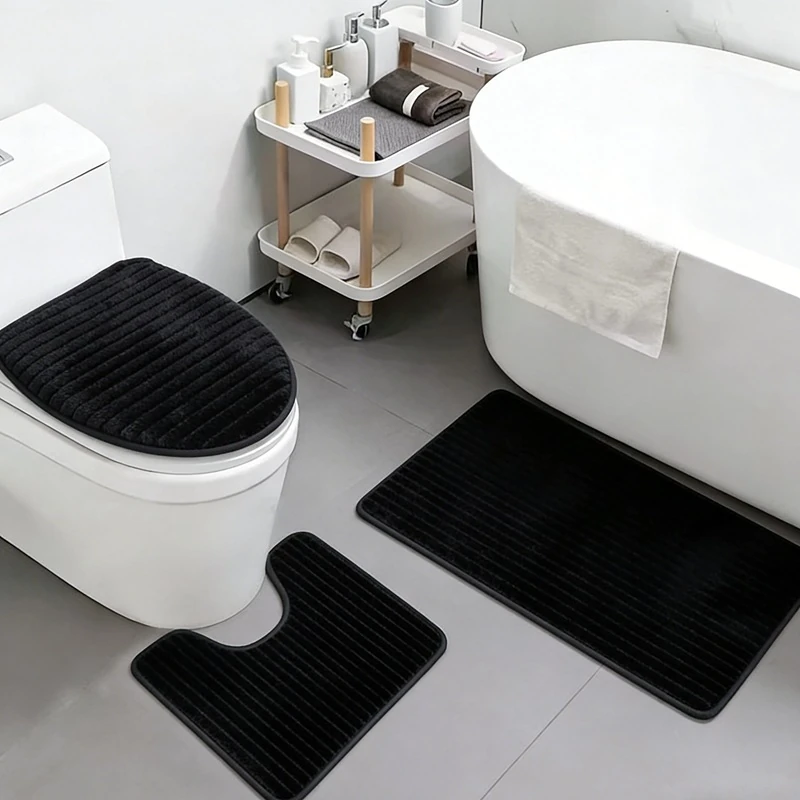
Some rugs and mats can be machine washed; others are specified for hand washing. “Washable” alone does not establish that an item can go in a washing machine. The answer depends on the care instructions for the exact finished product. For business buyers and retailers, that distinction belongs in the product information customers receive. For owners, it is the starting point for choosing how to clean a rug, bath mat or doormat. What the washing description tells you These three representative products all list polyester, yet their displayed care wording differs. Product and displayed care wording What it means Vintage Printed Velvet Runner (RG-005)Machine wash Machine washing is the listed method. Printed Raschel Prayer Mat (RG-007)Hand wash The listed method is washing by hand. A machine’s “hand wash” or delicate program is not a substitute for this instruction. Flannel Bathroom Mat Set (RG-009)Washable The description does not identify hand washing or machine washing. A method name is only part of the care information. It does not supply the temperature, cycle, detergent compatibility, spin setting or drying method needed to carry it out. Why the face fibre is not enough The shared polyester description above does not produce a shared washing instruction. A rug or mat includes its face, backing, edges and any internal layers, so care information needs to cover the whole construction. This also matters when ordering a custom version. A different backing, finish or size needs its own care confirmation; a similar pattern or photograph does not establish that the displayed product’s instructions still apply. Before washing and drying Use the product reference to find the relevant instructions, then work through these checks: Match the item. Check its reference, dimensions and construction. For a set, identify which component the instructions cover. Read the full care information. Find the…
Rug Sample Approval Before a Bulk Order
November 8, 2026
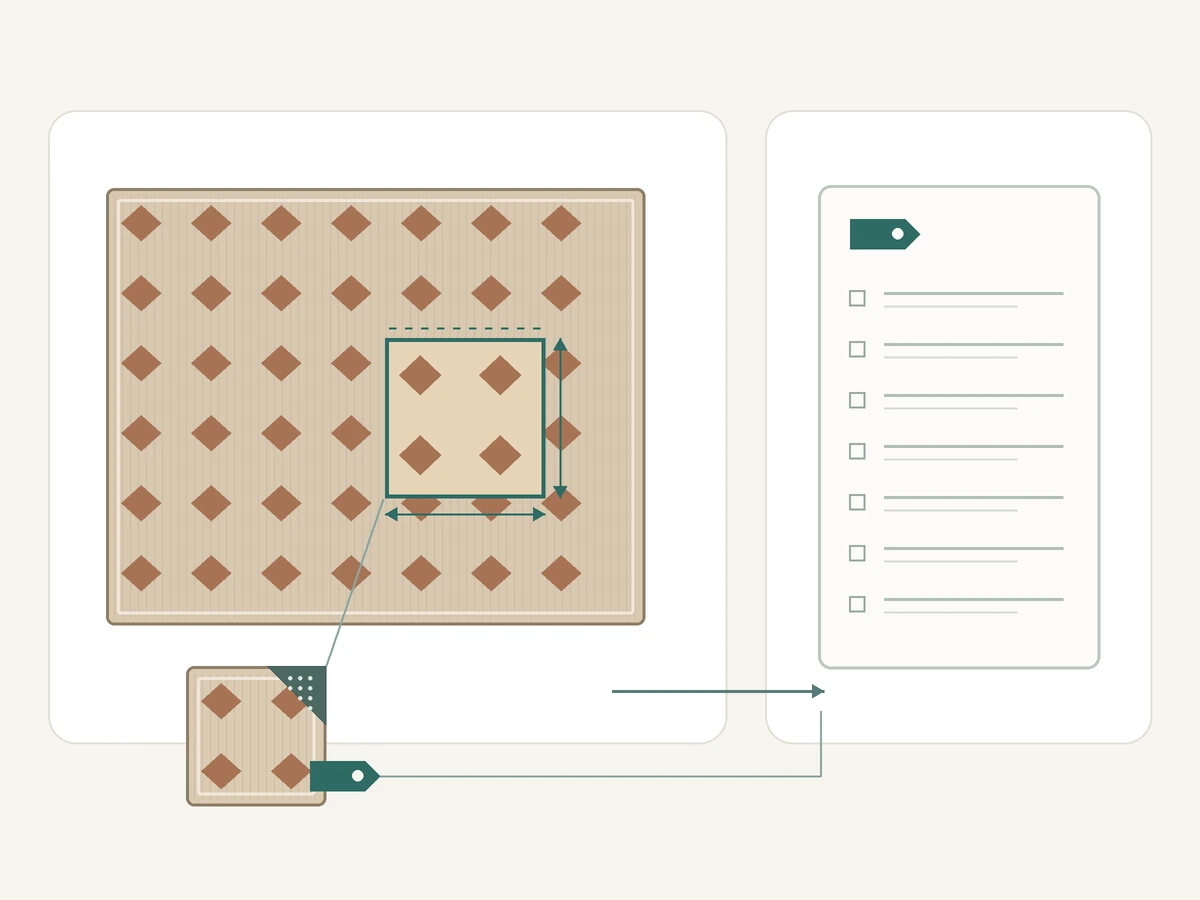
Approve a rug sample only for the features it actually represents. Match the physical sample to the current order specification, compare the relevant details and record exactly what you accept. A small colour or material swatch cannot confirm the final rug dimensions, the complete pattern layout or a finish it does not include. The decision should leave both buyer and supplier clear about what can proceed and what still needs attention. An attractive sample is useful, but a message saying “sample approved” may leave important parts of the order unresolved. Establish what the sample represents Record the sample label or reference, the date received and the specification or artwork revision you are comparing it with. Ask the supplier to clarify any unclear connection between that physical piece and the proposed order. Then identify what you have received: a colour swatch, a material section, an edge sample or an actual finished rug. Does it use the face material, backing and edge proposed for the bulk order? Document any differences. If the edge is unfinished, for example, there is no finished edge to approve. The highlighted portion represents a small sample. Keep its review linked to the full rug requirements and a written decision. This is a schematic, not a supplied sample. Compare colour in the intended light Place the physical sample and your colour reference side by side in daylight and under the lighting intended for the room. Record those conditions, especially if the colour relationship changes. Colours can appear to match under one light and differ under another, a phenomenon described in X-Rite’s explanation of metamerism. If the match is unacceptable in the intended lighting, explain the concern before approving the colour. A photograph helps identify the location of a concern, but should not be the sole colour approval reference….
How to Compare Rug Materials Beyond the Fibre Label
November 5, 2026
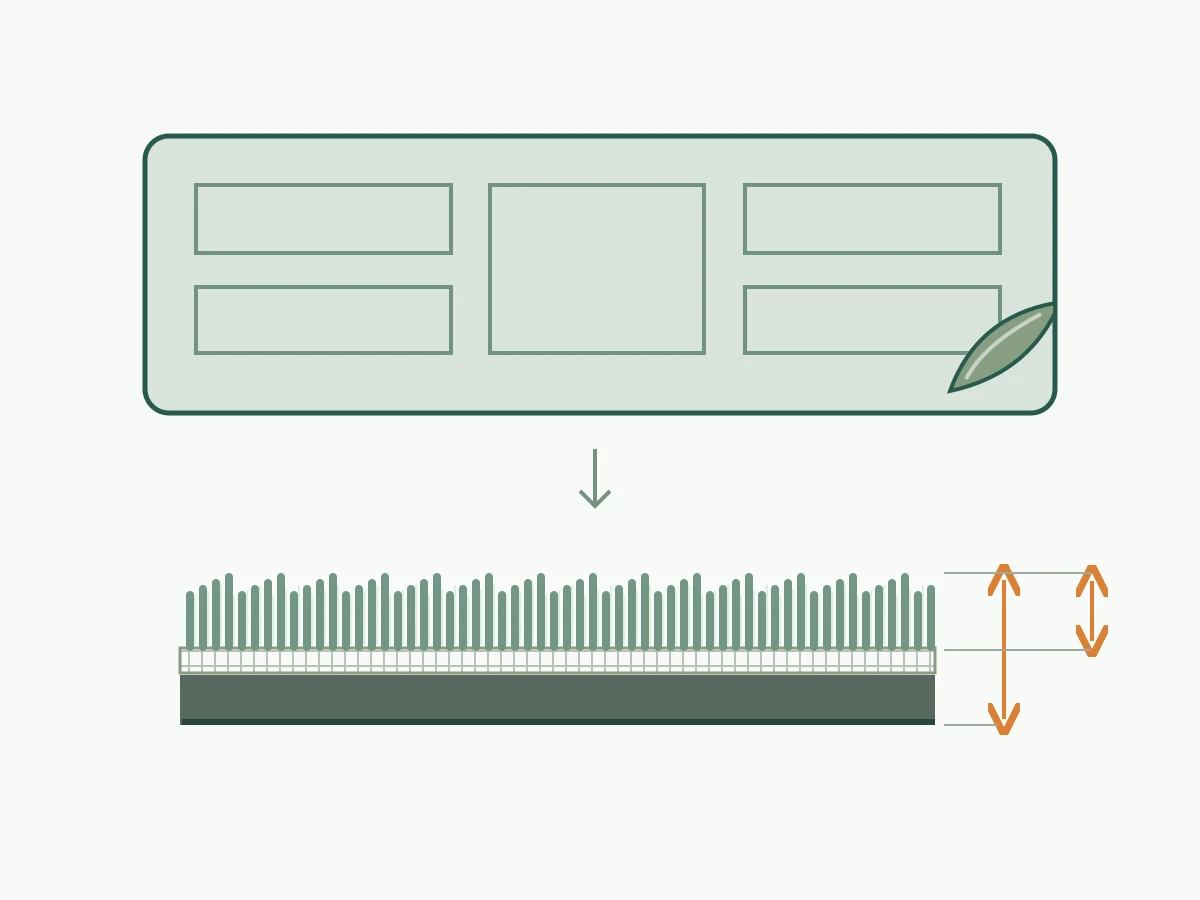
A fibre name, a surface description and a backing specification tell you different things about a rug. To compare business quotations, request them together: face fibre composition, surface construction, pile height or surface profile, full finished thickness and the exact backing. Then assess the proposed rug for its intended location. A material name or an attractive photograph cannot establish durability, floor compatibility or suitable cleaning on its own. This distinction matters when two quotations appear to describe the same product. Both may name the same face fibre, yet offer different textures, thicknesses and backings. Those differences need to be understood before you treat the rugs as equivalent or draw conclusions about their prices. What the fibre name tells you Fibre composition identifies what the rug’s face fibres are made from. Cotton and wool are natural fibre examples; polyester, nylon and polypropylene are synthetic examples. These are general material categories, also covered in IKEA’s rug-material overview. They do not mean that every supplier offers every fibre for every custom order. Where a quotation describes a blend, ask for the proportions. A blend name without percentages leaves part of the composition unspecified. Also confirm whether the stated material refers to the face, the backing or both: the visible fibres and the underside can be made from different materials. The fibre name leaves several practical questions open. It does not tell you how the surface is formed, how tall the pile is, how dense it is or what supports it underneath. Fibre type, construction, pile height, density and yarn details can all affect how the finished floor covering behaves. Comparing complete specifications is more useful than choosing from fibre names alone. Surface descriptions and construction are separate details Words such as “plush” or “velvet” communicate appearance or texture. “Printed” describes how a visual…
Logo Mat Artwork: Prepare the File and the Finished Layout
November 2, 2026
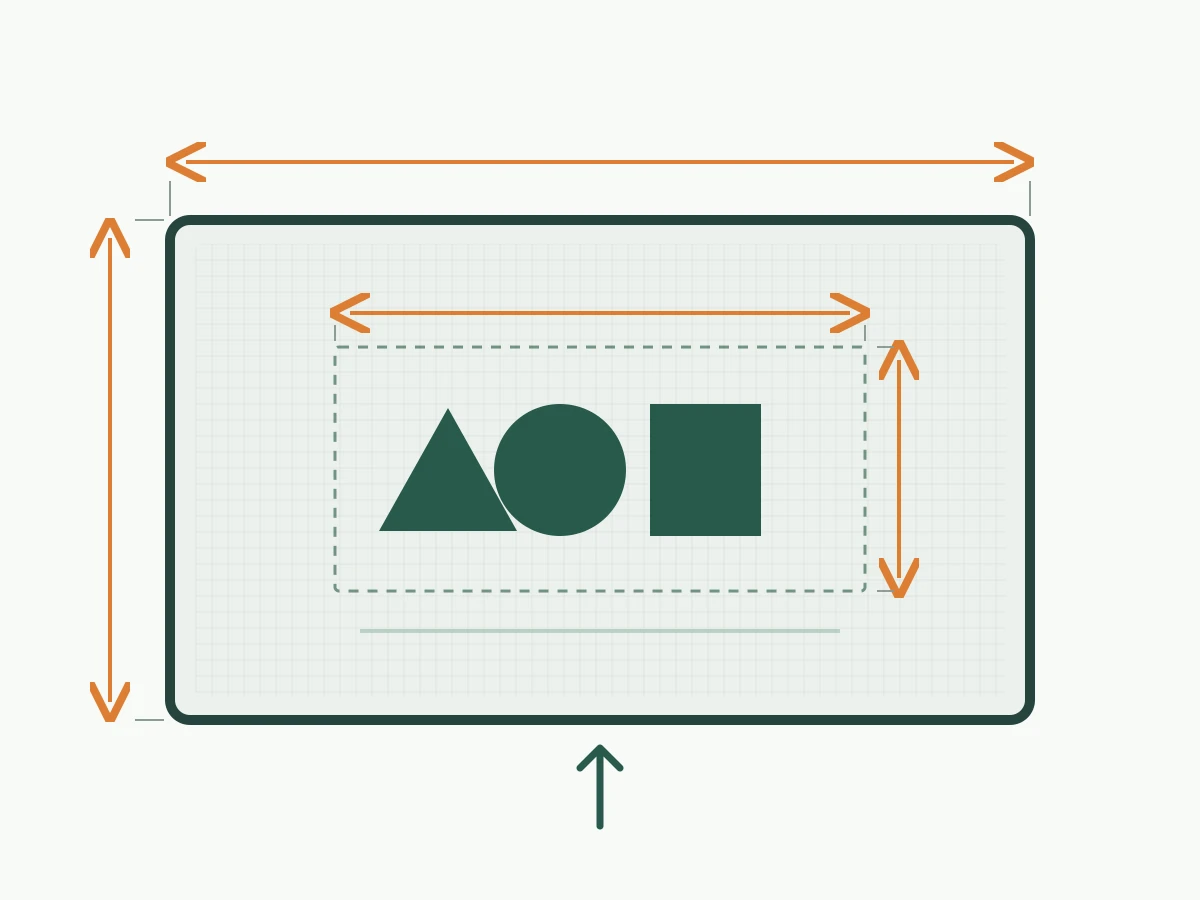
Send the strongest original logo artwork you have, together with a layout reference showing the finished mat dimensions, the printed logo size, its position and the direction from which it should be read. Then ask the supplier to confirm which files it accepts and whether the artwork has enough detail at the intended printed size. Keep the original artwork and the layout reference separate. This lets you explain how the finished mat should look without stretching or otherwise changing the logo to fit. Start with the original logo artwork If your business has original vector artwork, start there. Vector graphics describe shapes using mathematical lines and curves, so their vector edges remain sharp when scaled. Raster artwork is made of pixels; enlarging it can make those pixels visible or reduce apparent sharpness. Adobe explains the difference between raster and vector graphics. If a raster image is the only artwork available, send the strongest original version you have and state the intended logo size. The supplier needs to assess that source against the chosen product before you commit to an order. A PDF filename does not establish that a logo is vector artwork. A PDF can hold vector graphics, raster images or both. Putting a small picture into a PDF may leave the logo as the same small picture inside a different file. Adobe’s file guidance covers these distinctions. Use artwork your business is permitted to reproduce, and retain the original file so later layout changes can be traced to a clear source. Assess detail at the size of the printed logo The finished mat size and the printed logo size are separate measurements. A logo may occupy only part of a large mat, so the artwork needs to be assessed at the width and height it will actually have on…
Bath Mat Sizes: How to Choose a Single Mat or Set
October 30, 2026
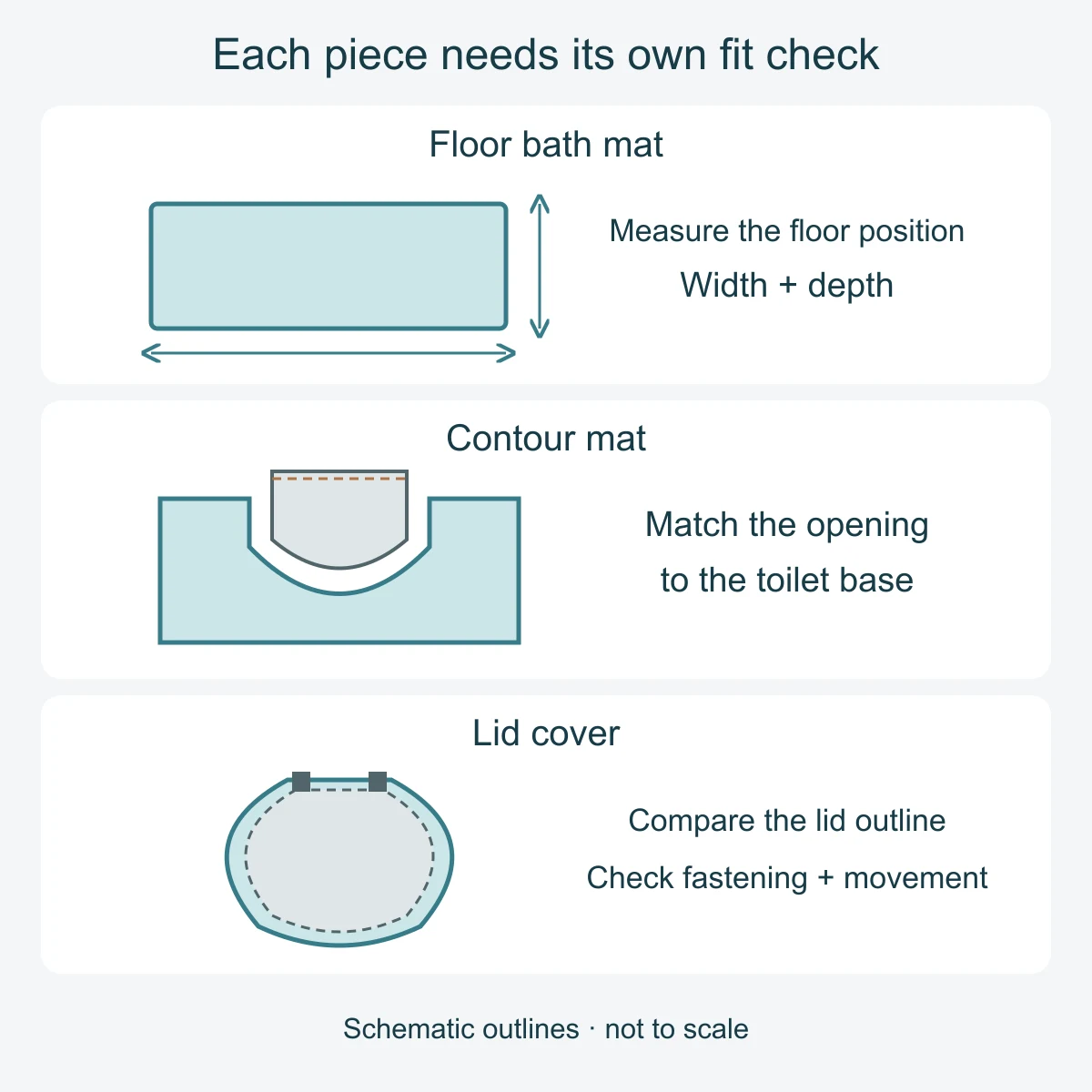
The single RG-002 bath mat has a 50 × 80 cm reference size. RG-009 bathroom sets have separate sizes for the bath mat, toilet contour mat and optional lid cover, so check each piece against its own location: clear floor space, the toilet base or the toilet lid. These supplier reference sizes are starting points, not a universal standard or a fit guarantee. Reference sizes for single mats and sets Use the following dimensions to compare the reference configurations. Sizes and patterns are discussed for an order, and the finished specification is confirmed for that order. Reference configuration Components and reference dimensions RG-002 single bath mat Bath mat: 50 × 80 cm RG-009 two-piece set Bath mat: 40 × 60 cm; toilet contour mat: 40 × 45 cm RG-009 three-piece set Bath mat: 45 × 75 cm; toilet contour mat: 40 × 45 cm; lid cover: 38 × 42 cm The two RG-009 configurations have different bath-mat sizes. The three-piece reference uses a 45 × 75 cm bath mat instead of the two-piece reference’s 40 × 60 cm bath mat. Its third component is a lid cover, not another floor mat. You can compare the available bath mats and sets before deciding which components to include. Choose the pieces you will use Choose a single bath mat when only one floor position needs a mat, such as beside the shower, bath or basin. Choose a two-piece set when you want both a bath mat and a toilet contour mat, and each fits its intended position. Choose a three-piece set when you also want a lid cover and have checked that it fits the actual toilet lid. A set is a group of separately fitted pieces. Decide whether you want every component before choosing the set size or quantity. Check the…
Door Mat Size Guide: Measure the Space and the Door Swing
October 27, 2026
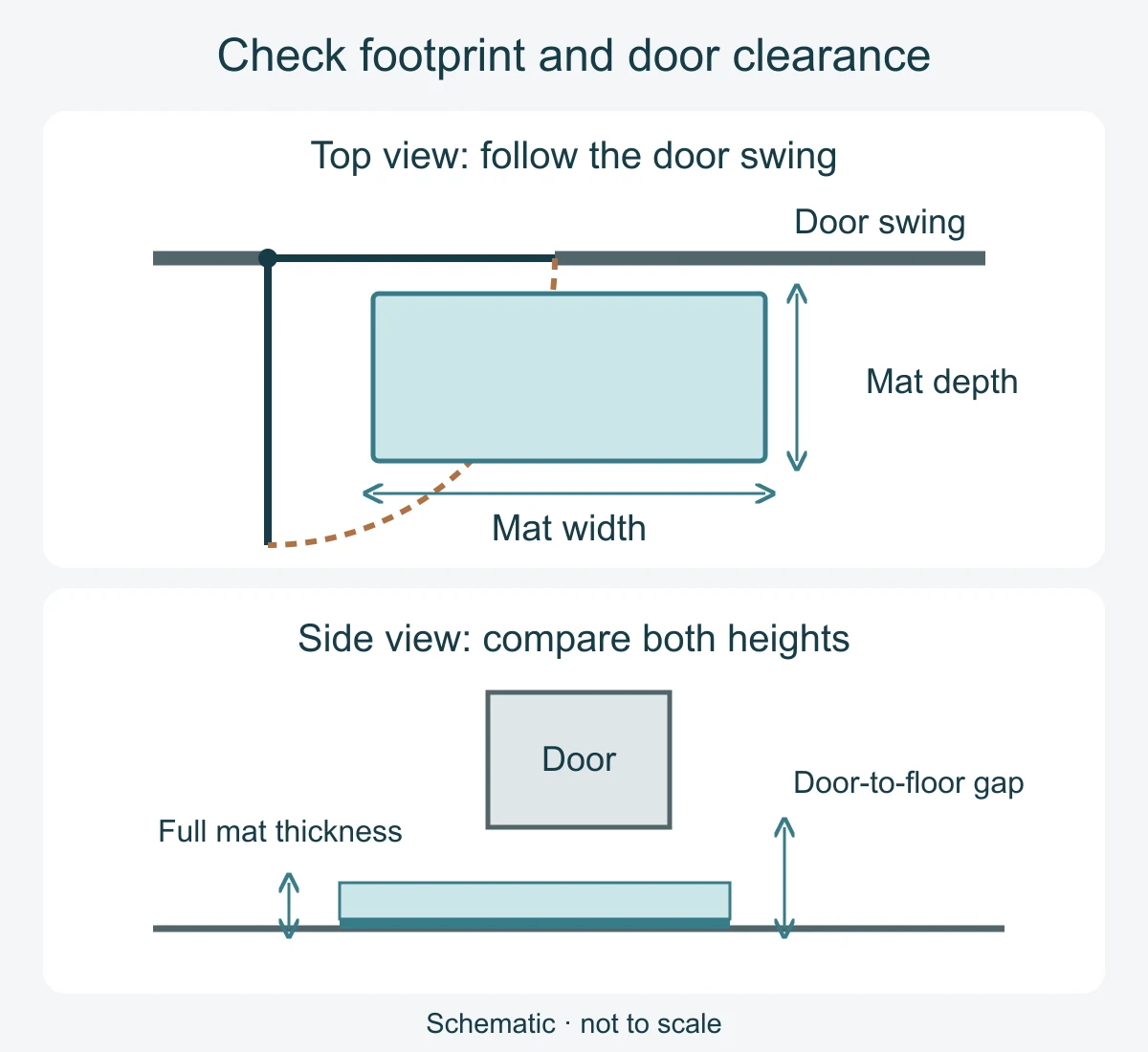
A door mat fits only when its width and depth suit the clear floor space and the door can move over its full finished thickness. A standard-size label does not establish either. Measure the intended position, check the smallest door-to-floor gap wherever the door crosses the mat, and confirm the fit with a sample before agreeing the finished specification. What does “standard door mat size” mean? Treat a listed size as a starting point for comparison. You still need the actual width across the doorway and the depth extending out from the threshold. Two dimensions alone do not tell you which way the mat will face, so label both directions on your sketch. Custom Carpet Maker’s Jacquard Tufted Door Mat (RG-008) and Flocked Tufted Door Mat (RG-014) each have a 50 × 80 cm reference size. That is a reference for these two styles, not a universal standard or a guarantee that either will fit your entrance. Sizes and patterns can be discussed for an order; you can compare the door mat styles before preparing your measurements. Measure the floor space and the door swing Start at the exact position where you want the mat. Measure the clear, level area there, keeping the proposed footprint clear of steps and obstructions. The available space elsewhere in the entrance may be larger, but it does not establish fit at your chosen position. Measure the width across the doorway. Mark this direction as “width” on the sketch. Measure the depth out from the threshold. Mark this direction as “depth” and show where the mat begins. Mark the door’s opening arc and the part of the proposed mat that falls beneath it. This is the area where vertical clearance also needs checking. When considering the 50 × 80 cm reference, state which dimension you…
How to Calculate the Area of a Rug or Mat Order
October 24, 2026
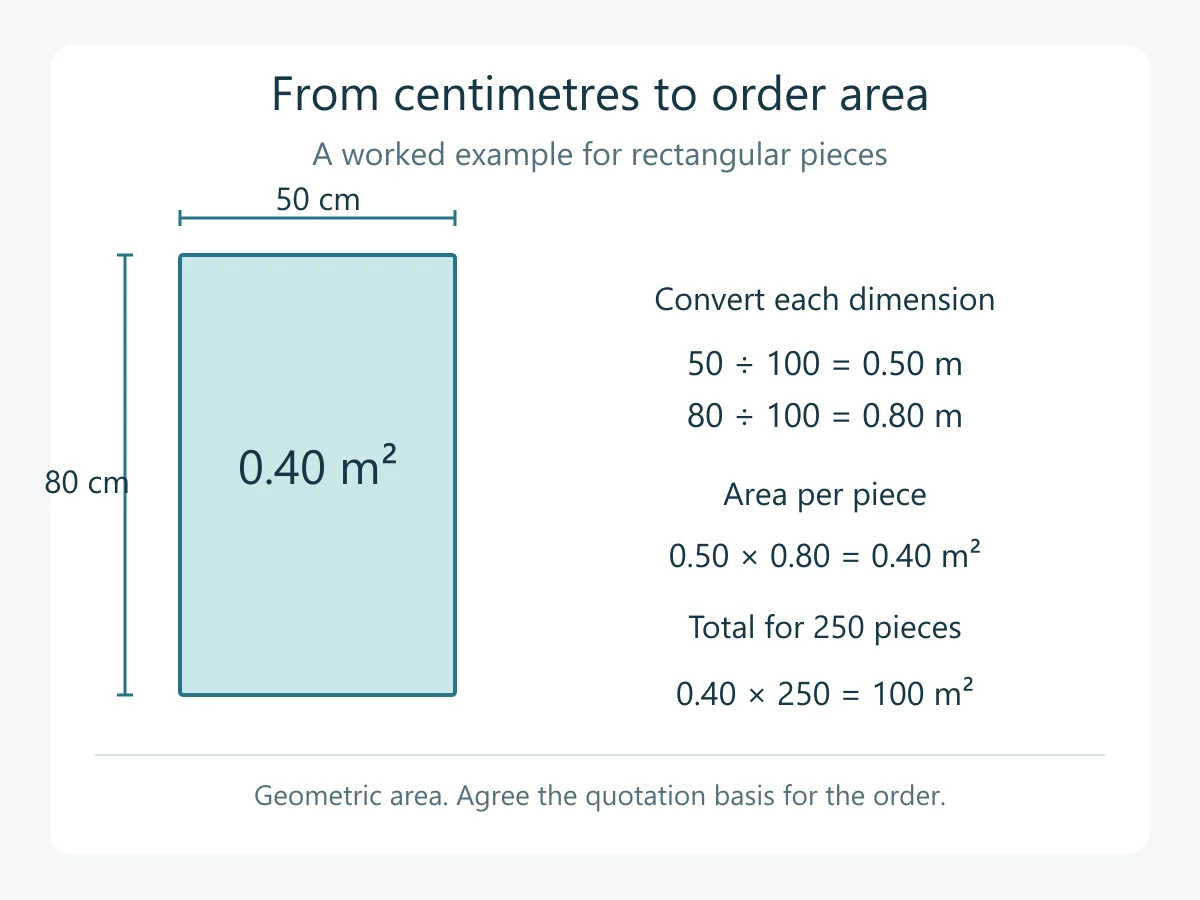
For rectangular rugs or mats, divide each dimension in centimetres by 100 to convert it to metres. Multiply the length by the width, then multiply by the number of pieces. Calculate each size separately and add the line totals. Total rectangular area in m² = length in m × width in m × piece quantity. This gives the geometric area of the pieces. The supplier still needs to confirm the quotation basis and whether the requested combination of designs, sizes and quantities can be accepted. Converting centimetres to square metres Both dimensions must use the same unit before multiplication. Since 1 m equals 100 cm, a rectangular piece measuring 50 × 80 cm becomes 0.50 × 0.80 m: 0.50 × 0.80 = 0.40 m² per piece. For 250 identical rectangular pieces: 0.40 × 250 = 100 m². Convert both dimensions to metres before multiplying by the piece quantity. This example gives geometric area. You can also calculate in centimetres first: 50 × 80 = 4,000 cm². The conversion for area is different from the conversion for length: 1 m² equals 10,000 cm², so divide 4,000 by 10,000 to obtain 0.40 m². Dividing square centimetres by 100 would give the wrong result. Different sizes in one request Keep each size and its quantity on a separate line. This makes the calculation easier to check and avoids applying one piece size to the whole order. Rectangular piece size Area per piece Piece quantity Line total 50 × 80 cm 0.40 m² 100 40 m² 40 × 60 cm 0.24 m² 250 60 m² The arithmetic total is 40 + 60 = 100 m². Reaching that total does not assure acceptance of this mixed-size request. Two- and three-piece sets For a set, calculate every component separately, including how many of each component the…
Kitchen Mat or Runner: Measure the Space Before Choosing a Size
October 21, 2026
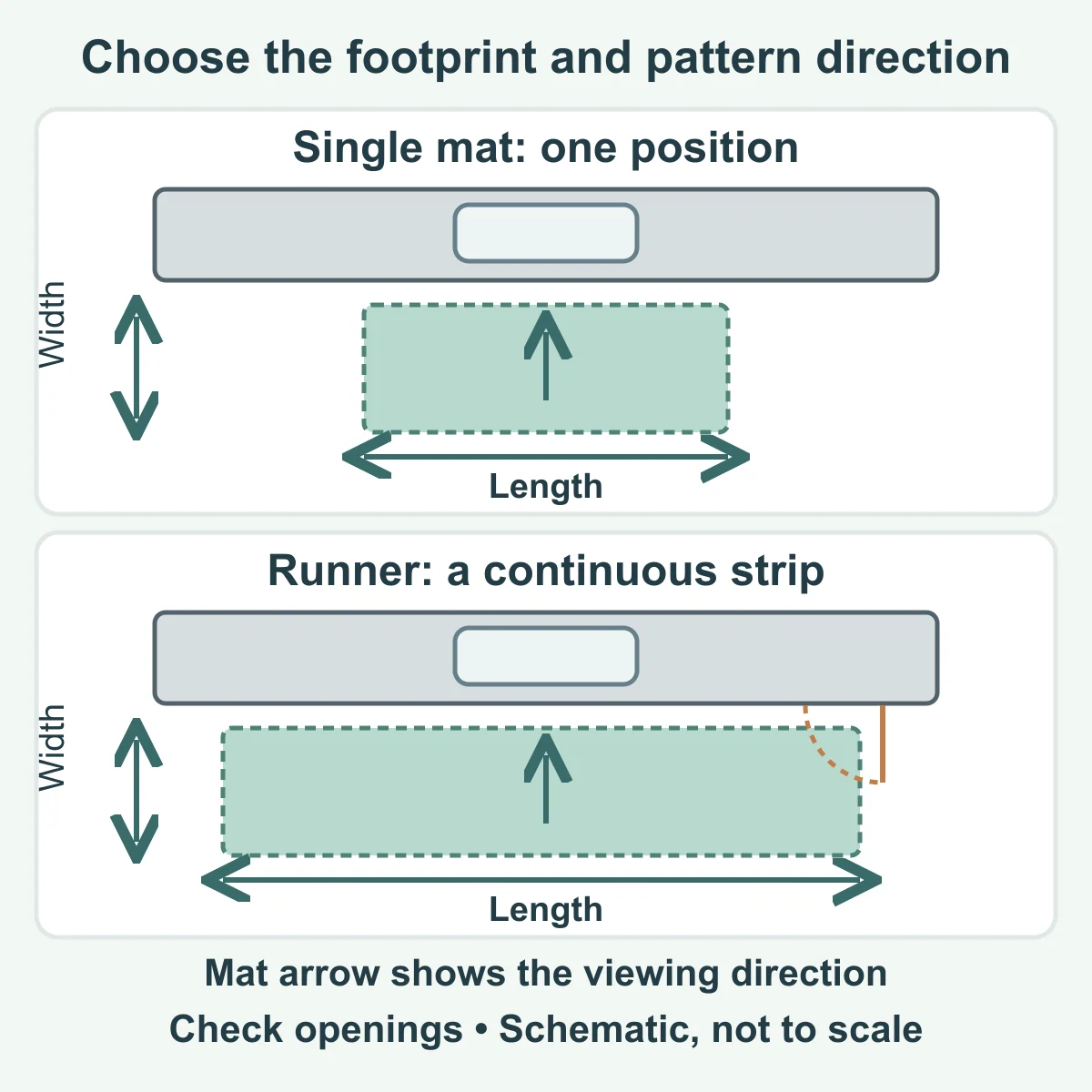
Choose a single kitchen mat for one standing position, such as the sink, or a runner for a continuous work area. The right width and length come from the usable floor space and movement in your kitchen. There is no single size that suits every layout. Before choosing dimensions, check that doors, drawers and appliance openings will work with the proposed finished mat. A paper or removable floor outline helps you check placement, but it cannot confirm finished thickness, clearance under an opening or grip on your floor. When one rectangle does not fit the layout A runner can follow a longer strip beside cabinets or between a cabinet run and an island. If the kitchen turns a corner or the work area is interrupted, consider separate footprints. An L-shaped layout does not necessarily need one mat spanning both sides. Start with the positions you want to cover, then see which shapes fit those positions. Measure usable width and chosen length Measure the intended strip at its narrowest usable point. Mark width across the strip and length along it, with a clear start and end. This makes the dimensions easier to interpret, especially when the available space changes along a cabinet run. For separate mats, measure each location individually rather than carrying one measurement across the whole kitchen. Mark the full proposed outline on the floor with paper or removable material. Open cabinets, the refrigerator, dishwasher and room doors as you normally use them. Check the complete footprint, including the ends of a runner. Schematic, not to scale. Mark the footprint and viewing direction; confirm opening clearance with the full finished mat. Test every opening with the finished product The floor outline is only the placement check. Compare the smallest applicable clearance with the mat’s full finished thickness, including its…