A fibre name, a surface description and a backing specification tell you different things about a rug. To compare business quotations, request them together: face fibre composition, surface construction, pile height or surface profile, full finished thickness and the exact backing. Then assess the proposed rug for its intended location. A material name or an attractive photograph cannot establish durability, floor compatibility or suitable cleaning on its own.
This distinction matters when two quotations appear to describe the same product. Both may name the same face fibre, yet offer different textures, thicknesses and backings. Those differences need to be understood before you treat the rugs as equivalent or draw conclusions about their prices.
What the fibre name tells you
Fibre composition identifies what the rug’s face fibres are made from. Cotton and wool are natural fibre examples; polyester, nylon and polypropylene are synthetic examples. These are general material categories, also covered in IKEA’s rug-material overview. They do not mean that every supplier offers every fibre for every custom order.
Where a quotation describes a blend, ask for the proportions. A blend name without percentages leaves part of the composition unspecified. Also confirm whether the stated material refers to the face, the backing or both: the visible fibres and the underside can be made from different materials.
The fibre name leaves several practical questions open. It does not tell you how the surface is formed, how tall the pile is, how dense it is or what supports it underneath. Fibre type, construction, pile height, density and yarn details can all affect how the finished floor covering behaves. Comparing complete specifications is more useful than choosing from fibre names alone.
Surface descriptions and construction are separate details
Words such as “plush” or “velvet” communicate appearance or texture. “Printed” describes how a visual pattern is applied. None of these descriptions uniquely identifies the face fibre.
Construction answers another question: how is the textile formed? In tufted construction, yarn is inserted into a primary backing. The loops can remain uncut or be cut to create a different surface, and further backing may be applied depending on the product. The Carpet and Rug Institute’s construction explanation describes this process.
Woven construction interlaces yarns into the textile structure. A woven rug is not automatically a flatweave, so “woven” does not settle what the exposed surface looks or feels like. Ask about both the construction method and the surface profile.
Neither “woven” nor “tufted” is enough to rank two rugs for quality or suitability. The process name is one part of the specification; the actual fibres, yarn details, surface and backing still need to be considered.
Cut pile, loop pile and the height above the backing
Cut pile has cut yarn ends at the surface. Loop pile retains the yarn loops, and some constructions combine cut and loop areas. These distinctions help describe a raised surface, as shown in The Carpet and Rug Institute’s surface guide. They do not prove how an individual rug in a photograph was manufactured.
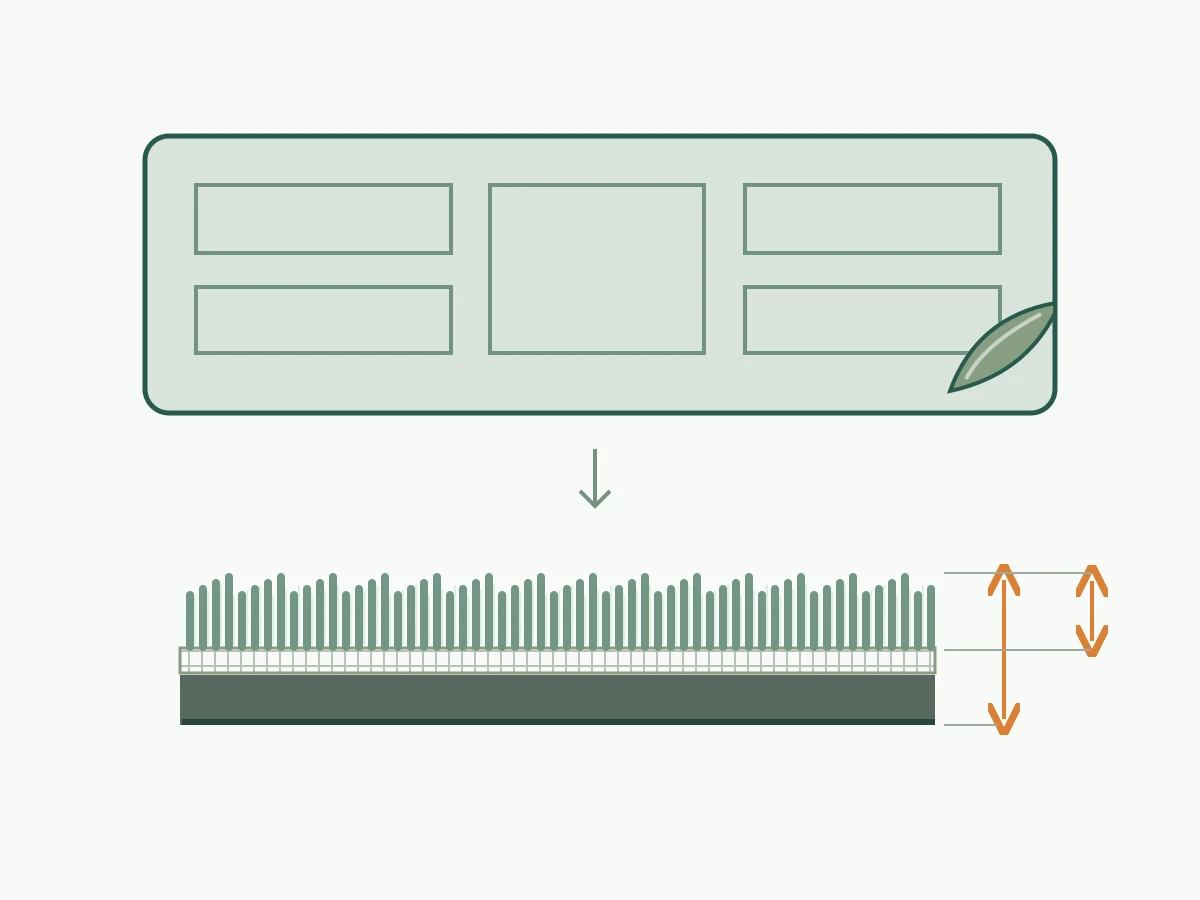
Pile refers to the raised surface yarns. Lower pile means a shorter raised surface; higher pile means a taller one. Those adjectives are useful for discussing a visual preference, but they are too imprecise for comparing quotations. Request the actual pile height in millimetres and ask how it is measured. IKEA’s explanation of rug pile and construction provides context for the terminology.
Keep pile height separate from full finished thickness. Pile height describes the raised yarns; full thickness includes the backing of the supplied rug. If a separate underlay is proposed, identify its thickness separately as another component. For a location where the available space limits thickness, the full finished measurement is the one you need to check.
What to check on the reverse and edges
The backing is part of the rug’s construction. Ask for its materials and finish, then confirm suitability for the intended flooring and conditions. A backing name alone does not prove grip, moisture behaviour or compatibility with every floor.
A useful physical comparison looks at the face, side profile, reverse and edge of the proposed sample. Close-up references can help you understand those areas when a sample is not yet available. A face photograph may communicate the pattern and texture you want, but it cannot establish composition, full thickness, care instructions or measured performance.
Cleaning also needs to be considered for the complete rug. Do not infer machine washing from a face material described as washable. The selected backing and edge finish must be included when the supplier confirms care instructions.
Comparing two proposals with the same face fibre
Suppose two proposals name the same face fibre, but one shows a shorter raised surface and the other a taller texture. This is an illustrative comparison, not a measured customer example. You still need to check whether their construction, full thickness and backing differ before deciding that the products are interchangeable.
| Compare this detail | What it helps you establish |
|---|---|
| Face composition, including blend percentages | Whether the visible fibres have the same stated composition |
| Construction and surface profile | How the textile is formed and what kind of surface is proposed |
| Pile height and full finished thickness | Whether the raised surface and overall thickness match your requirements |
| Backing materials and finish | What is underneath and what needs confirming for your floor |
| Care instructions for the complete rug | Whether the proposed product suits your intended cleaning approach |
Use these details to ask about a price difference. If the composition matches but the surface and backing differ, the quotations describe different finished products. Whether either one suits your location remains a separate decision.
Turn a visual preference into a custom enquiry
Custom Carpet Maker’s displayed area rugs include printed velvet and textured jacquard or flocked surface styles. The photographs show representative styles; they are not fixed, complete specifications for every order.
Start with the location and flooring, the pattern or raised texture you want, the full thickness that will fit and the care requirements. Custom Carpet Maker accepts business custom enquiries for sizes, composition, construction, backing and designs. The selected combination, manufacturing limits, finished measurements and permitted variation need to be agreed for the particular order. See the custom order information when preparing your request.
The starting business order quantity is 100 m². To send your rug specification, provide quantities by design and size, the intended use location and flooring, your preferred appearance and the destination. Ask for the proposed face, surface and backing details together. Sampling, pricing and production arrangements can then be agreed around that specification.