Approve a rug sample only for the features it actually represents. Match the physical sample to the current order specification, compare the relevant details and record exactly what you accept. A small colour or material swatch cannot confirm the final rug dimensions, the complete pattern layout or a finish it does not include.
The decision should leave both buyer and supplier clear about what can proceed and what still needs attention. An attractive sample is useful, but a message saying “sample approved” may leave important parts of the order unresolved.
Establish what the sample represents
Record the sample label or reference, the date received and the specification or artwork revision you are comparing it with. Ask the supplier to clarify any unclear connection between that physical piece and the proposed order.
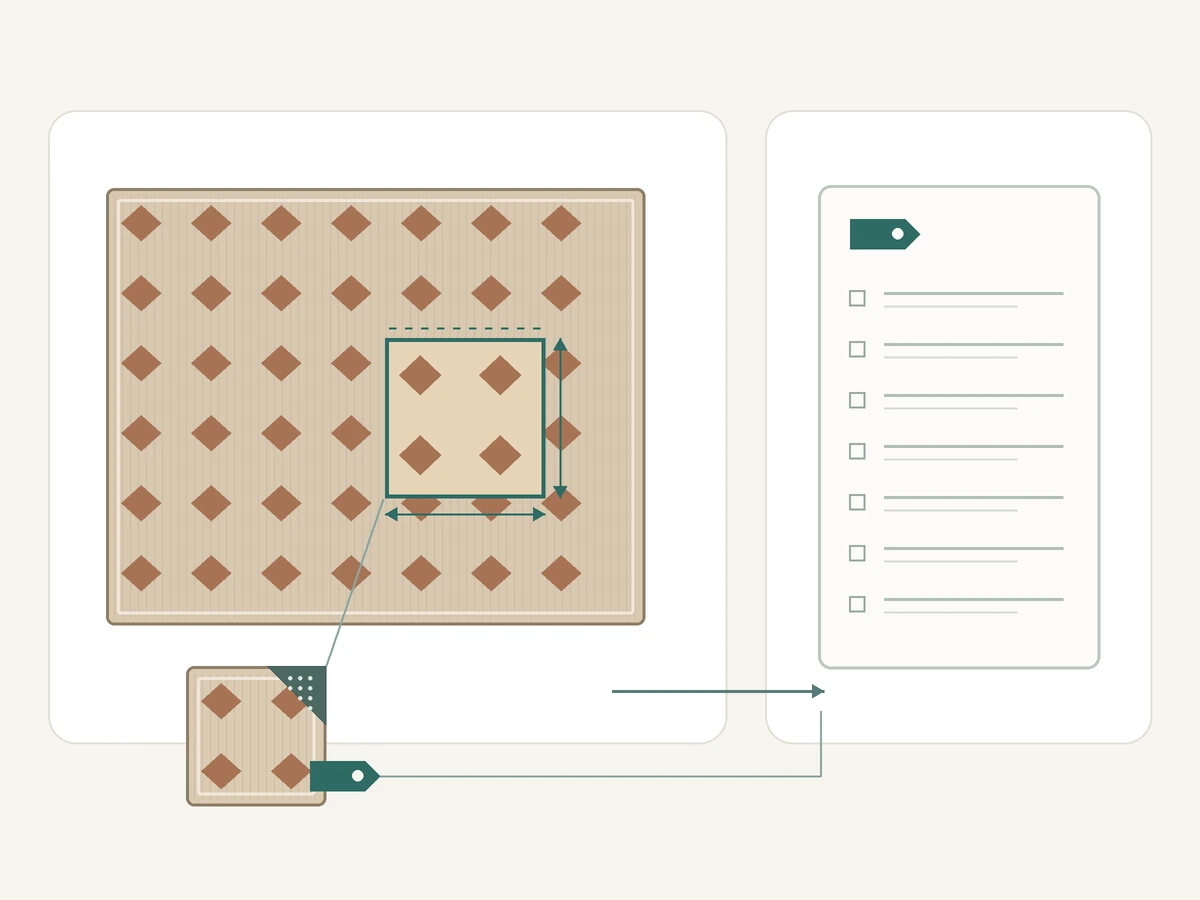
Then identify what you have received: a colour swatch, a material section, an edge sample or an actual finished rug. Does it use the face material, backing and edge proposed for the bulk order? Document any differences. If the edge is unfinished, for example, there is no finished edge to approve.
Compare colour in the intended light
Place the physical sample and your colour reference side by side in daylight and under the lighting intended for the room. Record those conditions, especially if the colour relationship changes.
Colours can appear to match under one light and differ under another, a phenomenon described in X-Rite’s explanation of metamerism. If the match is unacceptable in the intended lighting, explain the concern before approving the colour.
A photograph helps identify the location of a concern, but should not be the sole colour approval reference. Keep the physical sample available for comparison.
Separate size, pattern and construction checks
Write down the intended final dimensions and units from the order specification. If you also measure a small review piece, label those as sample measurements. When the sample is the actual finished item at the intended size, compare its measurements with the specification. Agree how to measure it, what the dimensions include and the permitted variation for that product. There is no universal dimensional tolerance to assume.
Compare the pattern scale and direction with the current design reference. A small section may show a motif without showing its position across the whole rug. Keep full layout approval open if the sample does not represent it.
Examine the face and texture, then turn the piece over to review the proposed backing. Compare any finished edge with the specification. Keep the stated composition beside these observations: appearance and touch alone do not establish fibre composition, floor grip, fire performance or durability. An order requirement for one of those properties needs evidence beyond a visual review.
Read the care instructions for the complete proposed product. Missing or unclear instructions belong on the list of questions to resolve, rather than being replaced with assumptions about cleaning.
Use a record that makes partial approval clear
Copy this blank record into your purchasing notes and fill in the right-hand column. It is suggested buyer paperwork, not a description of a supplier’s established procedure.
| Field | Your notes |
|---|---|
| Order and design reference | |
| Sample label and date received | |
| Specification or artwork revision | |
| Features represented; features not represented | |
| Final dimensions and units; relevant sample measurements | |
| Observations, colour comparison conditions and requested changes | |
| Agreed variation and assessment method | |
| Decision, approver and date | |
| Outstanding confirmations and next action |
Your decision can approve named features, request a revised sample for specified concerns or hold approval while information is missing. State which of these applies and identify the relevant sample and specification.
Suppose a buyer accepts the colour of a small sample but is still waiting for confirmation of the final rug size and edge finish. In this hypothetical situation, the record should accept the colour and leave size and edge finish open. Calling the whole product approved would go beyond what the buyer has assessed.
Keep production authorisation separate until the unresolved items are settled with the supplier.
Keep the reference when the specification changes
Retain the labelled sample with the written agreement. Ask how the supplier will retain or identify its corresponding reference; do not assume it keeps a duplicate physical sample.
If the design, backing or another specification changes, record the affected revision and which parts of the earlier approval still apply. Give a revised sample a distinct reference when one is needed. That keeps a decision about the earlier piece from silently carrying over to a changed product.
Requesting a sample from Custom Carpet Maker
Custom Carpet Maker can send samples for business buyers. Samples are charged at retail prices, and the sample charge can be credited against your next goods order. Confirm the applicable credit arrangement when requesting the sample.
The starting bulk order quantity is 100 m²; the division between designs, sizes and pieces needs confirmation for your order. The custom order information explains the specification discussion. Product photographs show representative styles, so use them to describe a preference rather than as a complete order specification.
To request a rug sample, send the product type, design, target dimensions, intended quantity and destination. Say what the sample needs to help you decide. Ask what it will represent, then keep your review tied to that sample and the agreed order version.