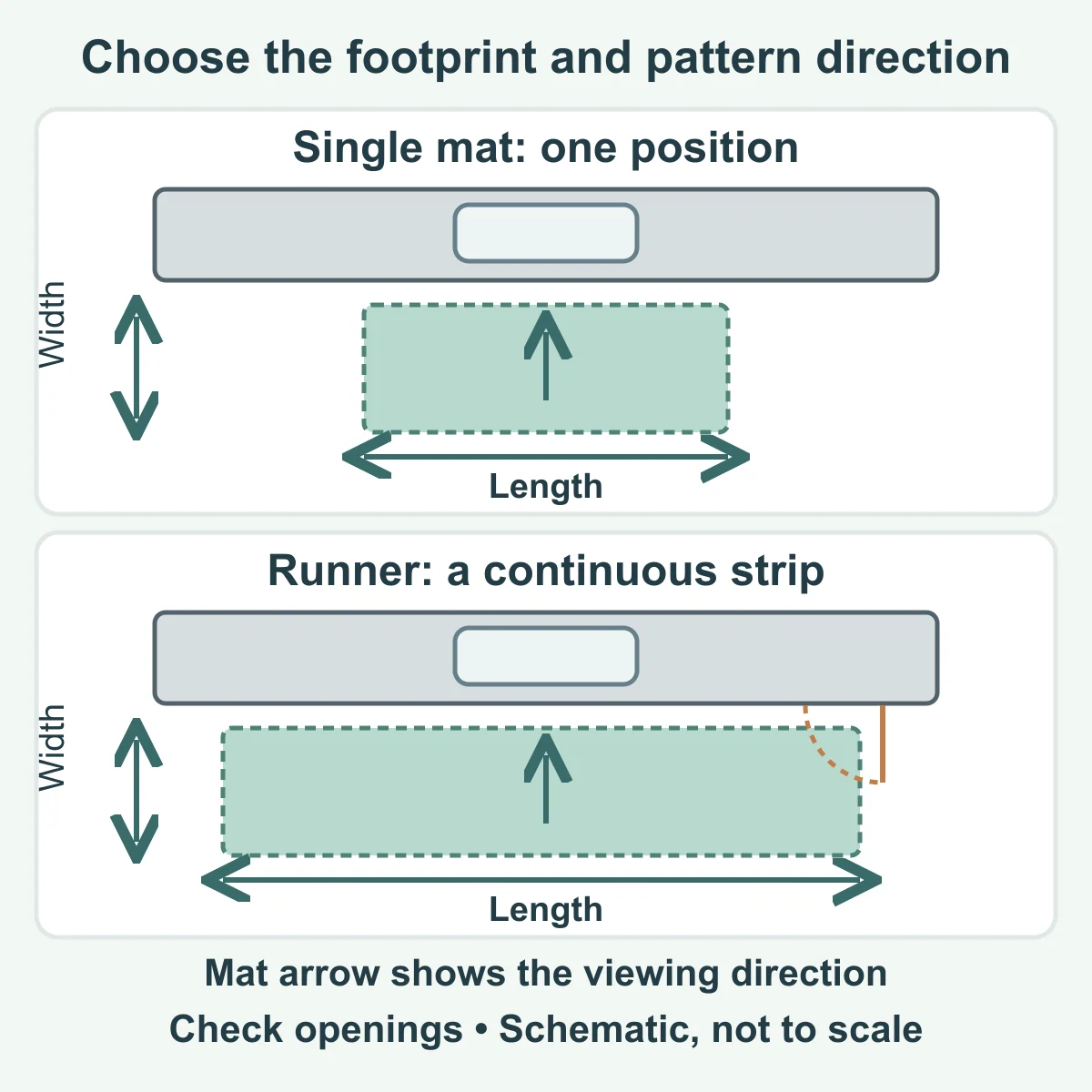
Choose a single kitchen mat for one standing position, such as the sink, or a runner for a continuous work area. The right width and length come from the usable floor space and movement in your kitchen. There is no single size that suits every layout.
Before choosing dimensions, check that doors, drawers and appliance openings will work with the proposed finished mat. A paper or removable floor outline helps you check placement, but it cannot confirm finished thickness, clearance under an opening or grip on your floor.
When one rectangle does not fit the layout
A runner can follow a longer strip beside cabinets or between a cabinet run and an island. If the kitchen turns a corner or the work area is interrupted, consider separate footprints. An L-shaped layout does not necessarily need one mat spanning both sides. Start with the positions you want to cover, then see which shapes fit those positions.
Measure usable width and chosen length
Measure the intended strip at its narrowest usable point. Mark width across the strip and length along it, with a clear start and end. This makes the dimensions easier to interpret, especially when the available space changes along a cabinet run. For separate mats, measure each location individually rather than carrying one measurement across the whole kitchen.
Mark the full proposed outline on the floor with paper or removable material. Open cabinets, the refrigerator, dishwasher and room doors as you normally use them. Check the complete footprint, including the ends of a runner.
Test every opening with the finished product
The floor outline is only the placement check. Compare the smallest applicable clearance with the mat’s full finished thickness, including its backing and edges. Confirm the fit with the proposed product or a sample. A drawing cannot show whether a real edge will catch beneath a moving door or drawer, and it does not establish a safe clearance.
If an opening catches or pushes the mat, change the footprint, move its location or discuss a different finished specification. Do not force it into place. Confirm the selected backing, edge finish and compatibility with your floor before approval.
Use 50 × 160 cm as a reference
Custom Carpet Maker’s printed kitchen runner, RG-004, has a reference size of 50 × 160 cm, polyester composition and digital printing. Use those dimensions as a starting point for checking that product against your space. They are not a standard for all kitchens or evidence of available stock. Sizes and patterns are discussed for each order.
Set the pattern direction and send a clear enquiry
Pattern direction is a separate choice from width and length. If the design contains wording or a directional motif, decide where it should be viewed from: for example, the sink standing position or the room entrance. Mark that viewpoint and a direction arrow on the same sketch, then agree the final arrangement before approval.
Once the footprint is clear, compare kitchen mat designs. Ask for the finished thickness and product-specific care instructions. A decorative textile design or its size does not establish anti-fatigue performance, oil resistance, suitability for industrial kitchens or a quantified grip rating.
Custom Carpet Maker supplies business custom orders starting at 100 m². Send your kitchen mat dimensions, the quantity of each size and your desired design. Acceptance of a size or design mix and the quotation basis are confirmed individually.